A Greenhouse Gas Analyzer should be selected from the measurement application, not from the phrase “carbon monitoring” alone. Buyers first need to define which gases must be measured, expected concentration ranges, whether the source is a stack, process stream, ambient sample or laboratory sample, whether measurement is continuous or periodic, sample temperature and moisture, required response time, reporting basis, gas-flow information, communications and verification requirements. A concentration analyzer can be suitable for one carbon-emission project and unsuitable for another. The correct buying decision depends on whether the instrument’s measurement method and sampling configuration match the actual source, concentration level and reporting objective.
Start With the Reporting or Process Question
“Measure greenhouse gases” can describe very different projects. A facility may need continuous stack concentration for emission monitoring, a process engineer may want combustion or process-gas trends, a laboratory may analyze collected samples, or a corporate carbon program may need data that can be converted into mass emissions.
Before selecting an analyzer, the buyer should state what decision the data will support. For example:
- continuous monitoring of a stationary emission source;
- process optimization or combustion monitoring;
- periodic source testing or verification;
- laboratory analysis of collected gas samples;
- carbon-accounting input for direct emissions;
- research or environmental monitoring.
The objective changes the required architecture. A continuous stack project needs an installed sampling and data path. A laboratory workflow may use gas bags, cylinders or vials. A carbon-accounting project may need additional flow or activity data because concentration by itself does not equal mass emission.
SINZEN lists the target product within its Gas Analyzer category. That category is a useful starting point, but the application has to be defined before the analyzer configuration can be approved.
Which Greenhouse Gases Must Be Measured?
Carbon dioxide, methane and nitrous oxide are common greenhouse-gas measurement targets, but not every project needs all three and not every analyzer configuration covers the same gas list or concentration range. The RFQ should therefore specify the components explicitly rather than asking for a generic “GHG analyzer.”
For each gas, provide:
- normal expected concentration;
- minimum and maximum concentration;
- required resolution or reporting unit;
- whether water vapor or oxygen also needs to be measured as a reference or process variable;
- known interfering gases in the sample matrix.
This matters because measurement ranges can span from low ambient or research concentrations to percent-level industrial process gas. A configuration designed for one range may not provide useful resolution in another. Likewise, a detector suitable for CO₂ and CH₄ may not automatically satisfy a project that also needs N₂O at much lower concentration.
The supplier should therefore return a component-and-range schedule tied to the quoted analyzer, not a generic list of gases that the manufacturer can measure somewhere in its portfolio.
Stack, Process, Ambient and Laboratory Applications Need Different Sampling Logic
The source determines how the gas reaches the analyzer.
A stack or duct measurement may involve hot, wet, dusty gas and requires a representative sampling point, extraction or in-situ arrangement, sample transport and conditioning. A cleaner process stream may require pressure control or a simpler sample panel. Ambient monitoring can involve much lower concentrations and different inlet design. Laboratory analysis may rely on discrete gas samples rather than a continuous process connection.
Buyers should describe the source in physical terms:
- where the sample comes from;
- temperature and pressure;
- moisture level and condensation risk;
- dust or aerosol condition;
- flow stability;
- distance to the analyzer;
- whether the sample is continuous, intermittent or batch-collected.
The measurement method should follow those conditions. An instrument that performs well on a dry calibration gas may need a complete sample-conditioning system before it can be used on a hot industrial stack.
Concentration Measurement and Emission Quantification Are Not the Same Decision
A greenhouse gas analyzer measures concentration or a related analytical quantity. A carbon-emission inventory may require a mass emission rate or total emissions over time. That calculation can require additional data such as stack gas flow, fuel use or another method specified by the applicable reporting program.
This distinction is critical in procurement. If the buyer’s final deliverable is “kg CO₂ per hour” or annual tonnes of CO₂-equivalent, the RFQ should explain how analyzer concentration will be combined with flow and reporting calculations. The supplier should not be asked to infer that architecture from the word “carbon.”
For some stationary-source programs, continuous emission monitoring systems combine pollutant or gas concentration measurements with flow or other calculations to produce an emission rate. In other programs, CH₄ or N₂O may be calculated from activity data or emission factors rather than measured continuously. The controlling method therefore depends on the jurisdiction and source category.
The buyer should identify whether the analyzer is being used for internal process information, a reporting input, or a regulated measurement method. That single distinction can change the documentation, QA and integration requirements.
Sample Moisture and Conditioning Can Change the Measurement Basis
Industrial greenhouse-gas measurement often involves moisture. The RFQ should state whether the result is expected on a wet basis or dry basis and how water vapor is handled in the measurement path.
In an extractive system, cooling and drying the sample changes its water content. That can be appropriate when the reporting method or analyzer requires a dry sample, but the buyer must then understand how the result is referenced. A hot-wet system may preserve water and condensable species differently.
The same logic applies to particulate and condensable material. Filters, heated lines, coolers and condensate drains are not neutral accessories. They can influence sample transport, maintenance burden and measurement bias if they are not selected for the target gas matrix.
Ask the supplier to explain:
- sample inlet condition required by the analyzer;
- whether the proposed system measures wet or conditioned gas;
- how condensation is prevented or managed;
- how filtration is handled;
- how the final result should be interpreted or corrected for the reporting basis.
Continuous Monitoring, Portable Checks and Laboratory Analysis Have Different Evidence Needs
A continuous monitoring system needs evidence that supports installed operation: sampling design, calibration strategy, ongoing zero/span checks, system alarms, data availability and maintenance access. A portable analyzer may need a simpler field-verification workflow. A laboratory gas chromatograph may require method performance, sample-handling and calibration information rather than a permanent process interface.
Do not ask all three applications for the same document package.
For continuous or compliance-related measurement, the buyer should identify the applicable performance specification or QA requirement where one exists. For internal process use, the acceptance plan can focus on range, repeatability, response, comparison against reference gas and integration with the plant system.
The evidence should match the decision. A certificate with no link to the quoted analyzer, range or gas components does not prove that the installed configuration will meet the project need.
Response Time and Update Rate Should Match How the Data Will Be Used
A combustion-optimization or process-control application may need fast response to operating changes. A carbon inventory or periodic verification program may place more emphasis on long-term stability and traceable records. A laboratory system may prioritize analytical separation and sensitivity rather than second-by-second response.
The buyer should state the required decision interval:
- seconds for process feedback;
- continuous minute-by-minute trend;
- hourly or reporting-period average;
- discrete laboratory sample result.
For extractive systems, total response includes sample transport and conditioning as well as analyzer response. Long sample lines, low flow or large conditioning volumes can create delay. The supplier should therefore distinguish analyzer response from installed system response where this matters to the application.
Installation and Data Integration Should Be Defined Before the Inquiry
The analyzer must fit both the gas stream and the plant information system. Buyers should define where the equipment will be installed, ambient conditions, available power, calibration gas, ventilation, instrument air if required, drainage and maintenance access.
Data requirements can include analog signals, RS485 or Ethernet communications, local display, alarms, data logging or integration with a DCS, PLC, CEMS platform or carbon-accounting database. The exact interface should be confirmed from the quoted product rather than assumed from the general product family.
For projects that calculate emissions from concentration and stack flow, the buyer should also define where flow data comes from and how the two data streams are synchronized. If another device provides oxygen, temperature, pressure or moisture correction, those interfaces should appear in the system boundary.
What Should Buyers Verify in a Representative Application Trial?
| Application Check | What to Verify | Why It Matters |
| Gas components | The quoted configuration covers every required gas and expected range | Prevents a generic “GHG analyzer” from omitting a key component |
| Sample condition | Temperature, pressure, moisture, dust and matrix are within the proposed sampling design | Confirms the sample can reach the analyzer in a measurable condition |
| Measurement basis | Wet/dry basis, units and any correction inputs are understood | Prevents a valid concentration from being interpreted incorrectly |
| Response | Installed update time is suitable for the control or reporting objective | Connects analyzer behavior to the actual use of the data |
| Calibration | Zero/span or reference-gas procedure covers the quoted gas/range configuration | Provides an operational verification path |
| Data integration | Signals, communications and time basis match the receiving system | Ensures the measurement can be used in CEMS, DCS or reporting workflows |
| Emission calculation | Required flow or supporting data are available if mass emissions are the final output | Separates concentration measurement from total emission quantification |
A representative trial does not have to recreate every operating condition, but it should test the assumptions that are most likely to change the buying decision.
How Should Buyers Review SINZEN’s Carbon Emission/Greenhouse Gas Analyzer?
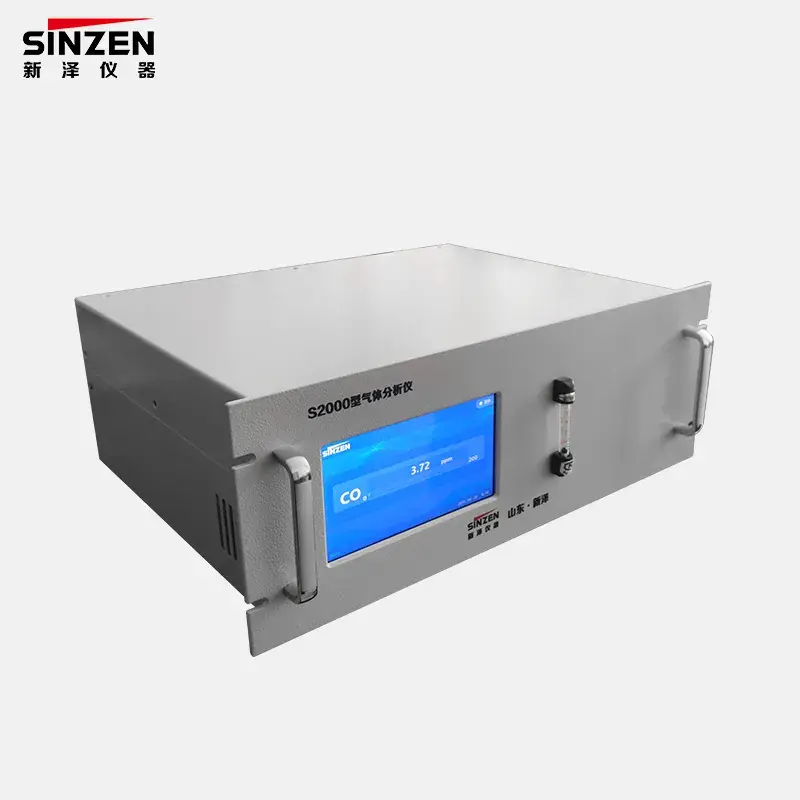
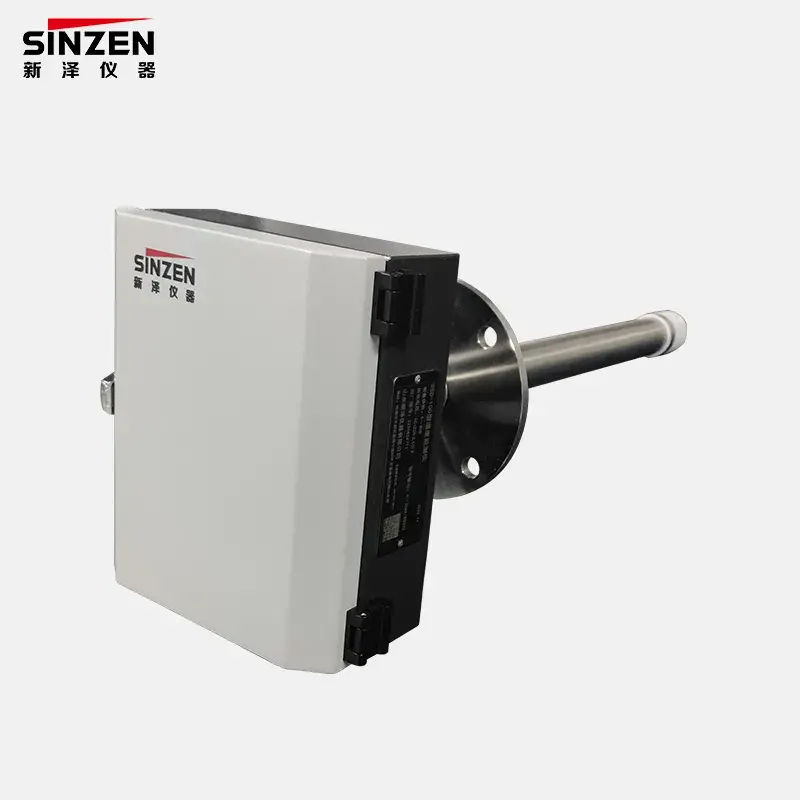
SINZEN’s Carbon Emission/Greenhouse Gas Analyzer page is the target product-family reference for this inquiry. The current client product record confirms that it belongs to the Gas Analyzer category and is supplied for B2B gas-analysis projects with specification confirmation and customization support.
The product page should not be interpreted as automatic proof that one configuration fits every CEMS, process, safety or laboratory application. The buyer still needs to confirm target gases, ranges, sampling condition, measurement basis, installation environment, data integration, document scope and final reporting method.
This is especially important because the term “greenhouse gas analyzer” can describe very different analytical architectures across the industry. The project should therefore be frozen around the actual application before the supplier’s product configuration is approved.
When Should Buyers Choose a Different Product Category?
A greenhouse gas analyzer is not automatically the right instrument for every task that mentions CO₂, CH₄ or emissions.
If the primary need is personnel or area safety alarm, a dedicated gas alarm device may be the appropriate architecture. If the project requires detailed laboratory separation of multiple trace gases in collected samples, a gas chromatograph may be more suitable. If the task is single-component high-speed in-situ process measurement, a laser or other dedicated analyzer may deserve separate evaluation. If the project is a regulated CEMS, the applicable local method and performance requirements must govern the system design.
This application boundary prevents the inquiry from forcing one analyzer family into a measurement job it was not selected to perform.
Build the Final Greenhouse Gas Analyzer RFQ Around the Application
A useful RFQ should include:
- application: stack, process, ambient, portable or laboratory;
- measurement purpose: process control, emissions monitoring, reporting, verification or research;
- required greenhouse-gas components;
- normal, minimum and maximum concentration for each gas;
- required measurement units and wet/dry basis;
- sample temperature, pressure, moisture and dust condition;
- continuous, intermittent or batch-sample mode;
- sampling-point and analyzer-location information;
- required response or update time;
- required calibration or verification method;
- applicable regulatory or customer measurement requirement, if any;
- flow measurement or other supporting inputs if emission rate is required;
- power, utilities and installation environment;
- DCS/CEMS/database signal and communication requirements;
- data logging and alarm requirements;
- documentation and acceptance scope;
- sample or trial requirement;
- quantity and packaging;
- destination and project schedule context;
- supplier deviations, alternatives and assumptions.
The supplier response should identify Quoted Configuration / Confirmed Application / Required Sample Handling / Evidence Scope / Deviation / Buyer Input Required. This makes quotation comparison possible without assuming that every greenhouse gas analyzer is designed for the same source or reporting method.
Once the application conditions are defined, buyers can submit the project through SINZEN’s contact and inquiry page with the gas list, sample conditions, reporting objective and integration requirements already prepared.