Direct answer:Before sending an RFQ, ask the industrial PC manufacturer to define the hardware scope, operating environment, interfaces, software image, data responsibilities, lifecycle policy, and test evidence. For a gas calorific value analysis system, also establish who integrates the analyzer, calculation method, sampling system, industrial PC, and plant network. A technically complete quotation should leave no responsibility gap between the computer supplier and the system integrator.
Why an industrial PC RFQ needs system context
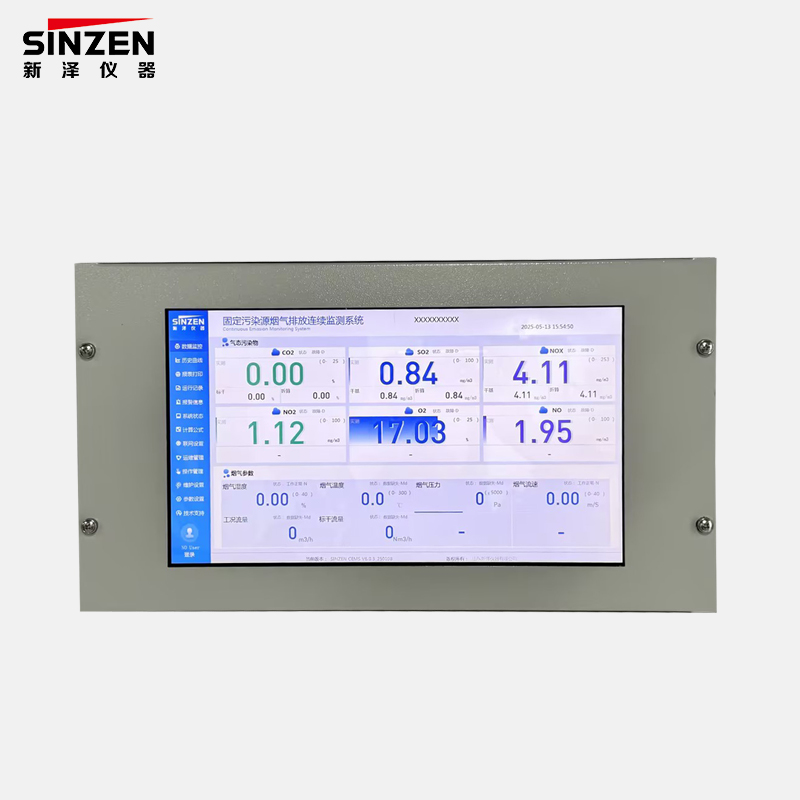
An industrial PC in a process gas project is not simply an office computer installed in a cabinet. It may collect analyzer data, display trends, generate reports, store records, exchange signals with a PLC or DCS, and support diagnostics. Its suitability therefore depends on the analyzer architecture, installation environment, communication map, and operating procedure.
The first question is not “What is your standard IPC?” It is “What must the IPC do in this particular system?” A buyer reviewing an industrial PC for gas analysis should send enough context for the supplier to separate required functions from optional functions. Otherwise, two quotations may appear comparable while covering different workloads, software, interfaces, and support obligations.
This distinction is especially important when the target equipment is a gas calorific value analysis system. The computer may display a calorific value supplied by another device, calculate it from composition data, or simply archive a value calculated elsewhere. Those are three different responsibilities. The RFQ must state which one applies.
Define the supply boundary before discussing hardware
Buyers should ask each bidder to mark the boundary of supply on a simple architecture drawing. The drawing should identify the analyzer, sample-conditioning equipment, industrial PC, network switches, PLC or DCS connection, printer if required, and any remote workstation. It should also show which party supplies cables, connectors, operating-system licenses, application software, database components, and commissioning services.
A supplier that provides only the computer hardware should not be assumed to own analyzer communication, calorific-value calculations, report templates, or site integration. Conversely, a system integrator may include the computer as one item within a wider industrial process gas analysis system. Ask the bidder to name the party responsible for each interface and for end-to-end performance.
Questions that expose a responsibility gap
- Who configures the analyzer protocol and verifies every data tag?
- Who defines the calorific-value calculation basis and reference conditions?
- Who supplies the application, database, drivers, licenses, and backup image?
- Who tests communication with the plant PLC, DCS, historian, or control network?
- Who restores the system after a storage-device or operating-system failure?
- Who approves software changes after the factory acceptance test?
Send a functional description, not a parts wish list
A processor name, memory size, and storage capacity do not explain the actual workload. The RFQ should describe the number of connected analyzers, data points, update intervals, retained history, simultaneous users, report frequency, alarm functions, and required integrations. The industrial PC manufacturer or integrator can then size the hardware against a defined task.
For a calorific-value project, state whether the system receives a single calculated value or multiple composition measurements. If a value is calculated from gas composition, define the requested calculation standard, reference temperature and pressure, unit conventions, and rounding rules. ISO 6976 is commonly associated with calculating calorific values, density, relative density, and Wobbe indices from gas composition, but the applicable edition and commercial or regulatory basis must be agreed by the project parties rather than assumed.
Also state what should happen when an analyzer value is invalid, delayed, under maintenance, or outside a configured range. A useful specification defines data-quality flags, fallback behavior, alarm handling, and report treatment. These details affect software logic and acceptance testing more than a marginal increase in processor speed.
Specify the real installation environment
Industrial computers are offered for different environmental limits. Buyers should provide the expected cabinet location, ambient temperature range, humidity condition, altitude if relevant, dust exposure, vibration source, power quality, and ventilation arrangement. Do not copy a generic “industrial grade” phrase into the RFQ and expect it to produce comparable offers.
Clarify whether the IPC will be installed in an air-conditioned analyzer shelter, a ventilated cabinet, a control room, or near process equipment. Identify whether humidity may be condensing. Ask the supplier to declare the operating and storage limits of the proposed configuration, including the display, storage device, power supply, and added communication cards-not only the base computer.
The RFQ should also define supply voltage, grounding arrangement, power interruption behavior, and the presence of a UPS. If automatic restart is required after power restoration, specify how the operating system, acquisition software, services, and analyzer connections should recover. A restart test can then be included in the factory acceptance test.
Map every physical and data interface
Interface shortages often appear late because “Ethernet and serial ports required” is too vague. List each connected device and record its physical port, electrical standard, protocol, data direction, update rate, and connector or isolation requirement. Include spare interfaces only when there is a defined expansion purpose.
| RFQ item | Buyer should state | Supplier should return |
| Analyzer data | Devices, tags, protocol, update rate, quality flags | Supported interface, driver ownership, test method |
| Plant network | PLC, DCS, historian, addressing and security constraints | Ports, protocols, network prerequisites and exclusions |
| Local operation | Display, keyboard, pointing device and user roles | Proposed hardware and access-control method |
| Data retention | Variables, interval, retention period and export format | Storage sizing, backup method and recovery procedure |
| Alarm output | Alarm list, priority, acknowledgement and hardwired needs | Software logic, relay or PLC boundary and FAT evidence |
If protocol conversion modules, network switches, isolators, or UPS equipment are required, ask whether they are included among the quoted gas analysis auxiliary accessories. The answer should be visible in the bill of materials rather than buried in a general description.
Control the operating system and software image
A stable software baseline is as important as the computer chassis. Ask the bidder to list the operating-system edition, language, licensing arrangement, application version, device drivers, database version, runtime packages, and security software included at shipment. The final handover record should identify the approved versions and any site-specific settings.
Buyers should request a recovery method appropriate to their maintenance policy. That may include a documented disk image, installation media, configuration export, license record, and step-by-step restoration procedure. Define where the backup is stored, who may use it, and whether restoration can be demonstrated during acceptance. A backup that has never been restored is not yet verified.
Ask how updates are controlled. Automatic updates may be unsuitable for an always-on acquisition station if they can restart services or change driver behavior without review. The supplier should explain the proposed patching process, supported software lifecycle, antivirus or application-control approach, and the treatment of remote access. Plant cybersecurity approval remains a project requirement; it should not be inferred from a generic remote-support feature.
Require evidence for lifecycle and configuration control
An industrial PC manufacturer may change processors, storage devices, displays, or communication boards during a product’s sales life. In a validated analyzer system, even a commercially equivalent substitution can require retesting. Ask how the supplier identifies the delivered configuration and notifies buyers of changes.
The quotation should state the expected availability of the proposed model, the policy for component substitution, the period for spare or repair support, and the recommended critical spares. Request model and serial-number traceability for the IPC and major replaceable parts. If the project may be repeated at several sites, define whether later units must use an identical image and interface layout or may use an approved successor configuration.
Build the FAT around operating risks
A factory acceptance test should prove the functions described in the RFQ. Merely powering the computer and opening the application is insufficient. The test should exercise real or simulated analyzer inputs, communication loss, invalid data, alarm acknowledgement, report generation, user permissions, time synchronization, backup, restart, and data recovery.
For the plant interface, agree whether the FAT uses the buyer’s PLC or DCS, a protocol simulator, or a documented signal test. Record the tested software versions and configuration files. If a calculation is performed on the IPC, include a set of known input compositions and independently agreed expected results. The test record should preserve both the inputs and outputs.
Minimum evidence to request with the offer
- System architecture and marked supply boundary
- Proposed IPC datasheet and configuration list
- Interface and protocol schedule
- Software, license, backup, and recovery scope
- Draft FAT procedure with acceptance criteria
- Lifecycle, change-notification, warranty, and support statement
How to compare quotations on a like-for-like basis
Normalize quotations before comparing price. Create a compliance sheet with one row for every functional, environmental, interface, software, documentation, test, and service requirement. Ask bidders to answer “included,” “excluded,” or “deviation,” with a reference to the offered document. Blank cells should not be treated as compliance.
Commercial review should include licenses, engineering, FAT participation, commissioning, travel, remote support, spare storage devices, and future image restoration. A low hardware price can become expensive when the buyer must separately resolve protocol drivers, calculation logic, database licenses, or site acceptance issues. Browse the wider SINZEN gas analysis product range only after the functional boundary is clear; product proximity does not automatically establish integration responsibility.
A representative qualification scenario
Representative scenario – not a claimed customer case.
A fuel-gas project requires composition data, calculated calorific value, local trends, daily reports, and data exchange with the plant DCS. One bidder quotes an industrial PC with an operating system, while another quotes a configured workstation with analyzer communication, calculation software, reports, backup image, and FAT. The first offer is cheaper, but the quotations are not comparable.
The buyer revises the RFQ to assign responsibility for the composition interface, calculation basis, DCS protocol, report fields, data retention, restoration test, and commissioning. Both bidders then return a marked compliance table and priced exclusions. The revised comparison exposes the true integration cost before purchase rather than during site start-up.
FAQ
Is an industrial PC manufacturer responsible for the complete gas analysis system?
Not necessarily. A hardware supplier may provide only the computer, while a gas analysis system integrator may own analyzer communication, calculations, reports, sample conditioning, and plant interfaces. The RFQ should allocate each responsibility explicitly and require bidders to state exclusions.
What computer specification should a buyer send first?
Start with the workload and environment: connected devices, data points, update rates, retention, reports, users, interfaces, cabinet location, temperature, humidity, power, and recovery needs. The proposed processor, memory, storage, and port configuration should be the supplier’s traceable response to those requirements.
Should calorific value be calculated on the industrial PC?
It can be, but it is not automatic. The project must define where the calculation occurs, which composition values are used, the calculation basis, reference conditions, unit conventions, invalid-data behavior, and verification method. These requirements should appear in the FAT.
Why request an IPC backup image?
A controlled backup can shorten recovery after storage or software failure. It should contain the approved operating system, drivers, applications, licenses where permitted, and configuration. Buyers should also request a restoration procedure and, when operationally important, a witnessed restoration test.
What should be tested when power returns after an interruption?
Verify hardware restart, operating-system startup, application services, analyzer reconnection, time synchronization, alarm state, data continuity, report generation, and communication with the plant system. Acceptance criteria should define the expected recovery sequence and any permitted data gap.
How many spare ports should an RFQ require?
Specify spare capacity against a credible expansion plan rather than an arbitrary number. Identify the likely future devices, protocols, electrical standards, and network restrictions. Unused connectors do not guarantee that drivers, isolation, licenses, or software capacity are available.
Prepare an RFQ that can be answered accurately
For a project-specific review, send SINZEN the gas composition, measurement ranges, analyzer arrangement, calculation requirements, site environment, communication list, data-retention needs, plant interface, required documents, FAT expectations, and delivery destination. Use the SINZEN contact page to submit the information and request a marked scope and compliance response.