A brick plant should not select a desulfurization flue gas online analyzer by pollutant name alone. The correct configuration depends on the gases to be measured, required ranges, measurement location, wet or dry reporting basis, moisture and dust loading, gas temperature, pressure, sampling distance, local reporting rules and required system availability. Buyers should define the measurement objective first: process adjustment, outlet verification, continuous emissions monitoring or a combination of these duties. They should then freeze the analyzer, probe, heated line, sample-conditioning system, calibration arrangement, data interface and shelter scope as one measurement chain. An analyzer can be suitable for SO₂ measurement while the complete system is unsuitable for the actual sample. A comparable RFQ therefore needs process data, reporting requirements, installation conditions and an itemized supplier response.
Start With the Measurement Duty, Not the Analyzer Model
Brick kilns and dryers do not present one universal flue-gas condition. Fuel, raw material, kiln operation, air leakage and desulfurization chemistry can change the concentration profile and the condition of the extracted sample. Before discussing instruments, the buyer should state where the measurement will be used and what decision it supports.
An inlet measurement may help characterize the load entering the desulfurization process. An outlet measurement may support process verification or regulated reporting. These positions can require different ranges and different attention to moisture, dust and temperature. A single analyzer specification copied between them may produce poor resolution at one point or insufficient range at the other.
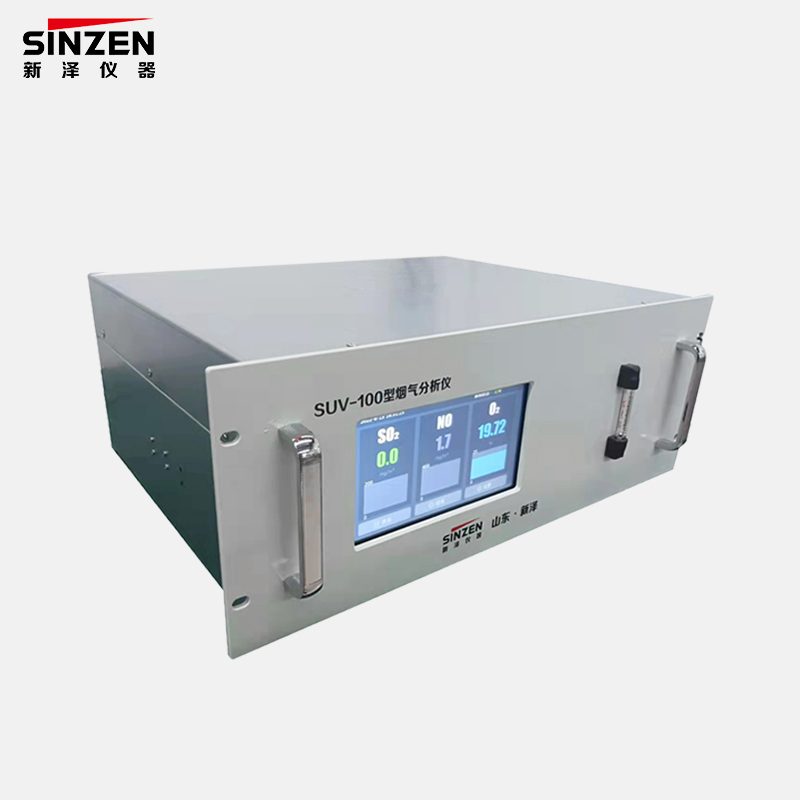
Buyers reviewing the SINZEN flue gas analyzer category should therefore begin with the measurement task and sample condition, then narrow the product family. The category page establishes relevant equipment options; the project specification determines the complete configuration.
Which Components Must Be Treated as One Measurement Chain?
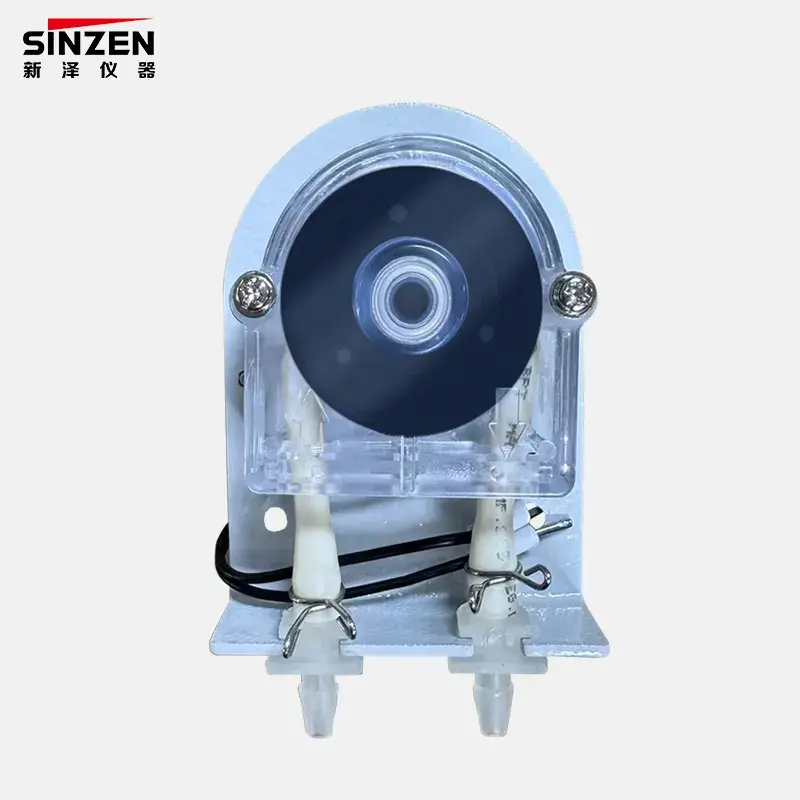
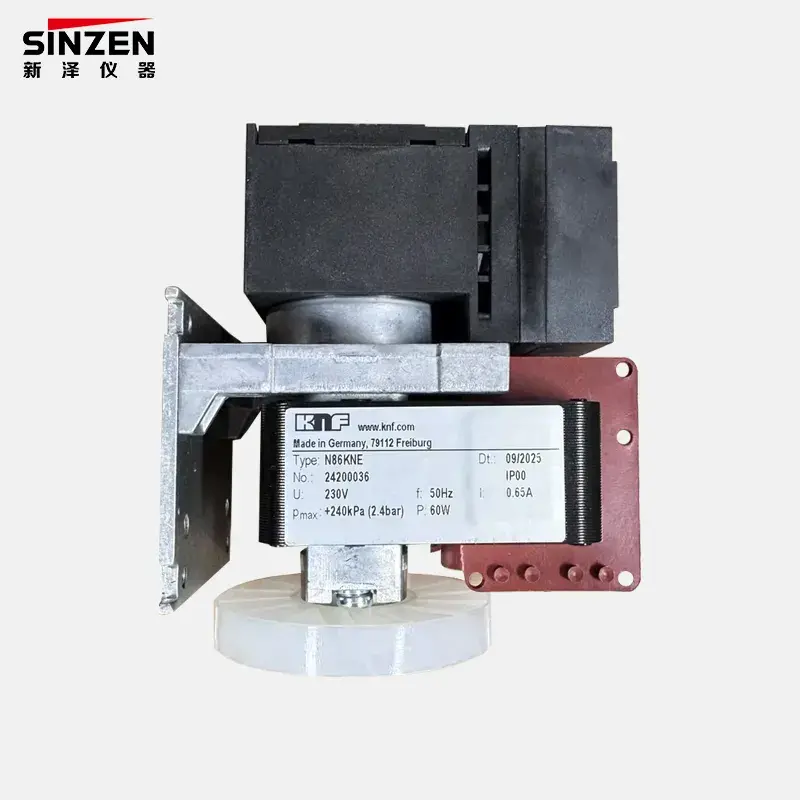
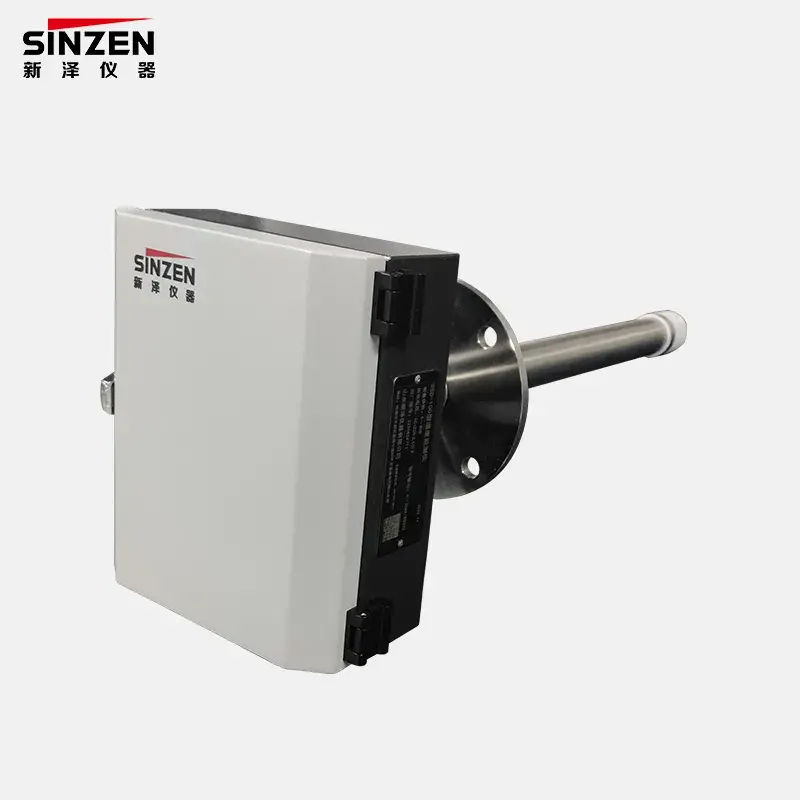
The analyzer is only one part of an extractive monitoring system. The measurement chain may include a sampling probe, particulate filtration, heated transport, condensate management, gas conditioning, sample pump, flow control, analyzer, calibration-gas connections, cabinet, data acquisition and communication interfaces. Whether every component is required depends on the chosen measurement principle and site conditions.
The interfaces between these components matter. A probe must collect a representative sample without unacceptable plugging. A line must transport the sample without uncontrolled loss or condensation. Conditioning must protect the analyzer while preserving the target component. Flow and pressure must remain within the analyzer’s specified operating conditions. The output signal must then map correctly into the plant control or reporting system.
This is why two quotations carrying the same analyzer label can have very different scopes and prices. One may include only the measuring unit; another may include the sample-handling system, cabinet, calibration manifold and data interface. The buyer must compare the full measurement chain, not the analyzer price in isolation.
Which Inputs Should Buyers Freeze Before Configuration?
| Buyer Input | Why It Matters | Supplier Confirmation | Evidence |
| Measurement objective and location | Defines duty and expected concentration profile | Proposed measuring point and system purpose | Process flow diagram and stack layout |
| Target gas components | Determines measurement principle and channels | Measured components and interference review | Analyzer datasheet |
| Normal, minimum and maximum ranges | Controls resolution and over-range margin | Configured range for each component | Quotation and configuration sheet |
| Temperature, pressure, moisture and dust | Defines sampling and conditioning duty | Probe, line and pretreatment arrangement | System diagram |
| Wet/dry basis and reference conditions | Affects reported values and comparison | Measurement and calculation basis | Data-handling statement |
| Sampling distance and ambient conditions | Affects line, heating and enclosure design | Line length and environmental configuration | Layout and bill of materials |
| Calibration and maintenance plan | Controls verification and availability | Calibration ports, gases and service access | Operation and maintenance scope |
| Outputs and communications | Determines plant-system integration | Signals, protocol and register scope | I/O list or communication map |
How Do Moisture, Dust and Temperature Affect the Configuration?
Moisture is not merely an environmental detail. If the extracted gas cools below its dew point, condensation can change the sample, damage components or create unstable readings. The supplier needs the expected gas temperature, moisture level, acid-dew-point risk where relevant, ambient range and transport distance to propose heating or conditioning.
Dust can load the probe and filters, increase maintenance and restrict sample flow. The buyer should state the expected dust condition and whether the measuring point is before or after particulate control. The supplier should describe filtration stages, blowback or cleaning provisions where offered, filter access and recommended inspection intervals. A generic “dustproof” statement does not define sample-path performance.
Temperature and pressure influence both extraction and analyzer operating conditions. The quotation should distinguish stack conditions from the conditions delivered to the measuring cell. If dilution, cooling or drying is used, the supplier should explain the measurement basis and any conversions required for the reported value.
How Should Buyers Define Pollutants, Ranges and Interferences?
SO₂ is commonly central to a desulfurization project, but the required system may also involve oxygen, nitrogen oxides, carbon monoxide or other project-defined variables. Buyers should not add channels simply because they appear in a standard package. Each channel needs a measurement purpose, expected range, required performance and reporting destination.
Range selection should use normal, low and upset concentrations rather than one maximum value. A range that only covers the worst case may provide weak resolution during normal operation. A range that only covers normal operation may saturate during start-up or process upset. Where automatic range switching is proposed, its effect on output mapping and data reporting should be clear.
Cross-sensitivity and background-gas effects should be reviewed against the real process composition. The buyer should provide known major components and likely interferents. The supplier should identify the measurement principle for each gas and state any conditioning or compensation assumptions. This creates a reviewable engineering basis without claiming that one technology is universally best.
Where Should the Sample Be Taken?
A good instrument cannot correct a poor sampling location. The measuring point should provide a representative gas stream and practical access for installation, inspection and calibration. Buyers should provide duct dimensions, flow direction, nearby bends or fans, platform access, flange information and the distance to the analyzer cabinet.
The sample point must also align with the project’s regulatory or process-control purpose. If local rules specify location, traverse, reference conditions or quality-assurance procedures, those requirements should be stated in the RFQ. The analyzer supplier can configure equipment against provided requirements but should not be expected to infer the jurisdiction or approval basis from the plant type alone.
How Should Buyers Evaluate the SINZEN Flue Gas Analyzer Offer?
The SINZEN Flue Gas Analyzer gives buyers a real product starting point for emission and process measurement discussions. However, a product page does not define the complete brick-plant project. The quotation still needs to identify the selected gas channels, ranges, measurement principle, sample interface, conditioning scope, enclosure, power, outputs, communication, calibration accessories and supplied documents.
Buyers should ask for an itemized configuration instead of accepting a single model name. Optional components must be separated from standard supply. If site data are incomplete, the supplier should mark the affected design points as assumptions or “buyer input required.” This prevents a preliminary selection from being mistaken for an approved project configuration.
What Evidence Should Be Reviewed Before Approval?
Approval should be based on a coherent document set. This normally includes the analyzer datasheet, system flow diagram, bill of materials, utility requirements, installation drawing, I/O list, communication description, calibration arrangement, maintenance-access requirements and document schedule. Project-specific certification or compliance evidence should be requested only when it is actually required.
A factory test can confirm the supplied configuration and basic functions, but it does not reproduce every stack condition. Site acceptance must address installation, utilities, sample flow, leak integrity, signal mapping, calibration response and data transfer under the project’s approved procedure. Responsibilities for commissioning, test gas and acceptance records should be assigned before shipment.
What Common RFQ Gaps Make Quotations Impossible to Compare?
- Only “SO₂ analyzer” is specified: the sample system, range and reporting basis remain undefined.
- Only the maximum concentration is provided: normal operating resolution cannot be evaluated.
- Moisture and dust are omitted: suppliers may quote fundamentally different conditioning systems.
- The measuring point is not identified: inlet and outlet duties become mixed.
- Communications are stated as “standard”: protocol, physical interface and data map remain unresolved.
- Acceptance is not defined: the buyer and supplier have no shared release criterion.
What Should a Brick Plant Flue Gas Analyzer RFQ Include?
- Plant process, fuel and desulfurization method.
- Measurement objective and exact sampling location.
- Required gas components and reporting basis.
- Normal, minimum, maximum and upset concentrations.
- Gas temperature, pressure, moisture, dust and flow conditions.
- Duct size, flange, platform and sampling-line distance.
- Ambient temperature, installation area and enclosure requirements.
- Power, instrument air and other available utilities.
- Analog, digital and communication interfaces.
- Calibration, maintenance and spare-parts requirements.
- Required standards, documents and acceptance procedure.
- Quantity, destination, schedule and commissioning scope.
Send these inputs through the SINZEN gas-analysis project inquiry form. Ask the supplier to return every critical item as Confirmed, Deviation, Alternative or Buyer Input Required so the technical comparison is completed before price approval.