Every industrial facility that burns fuel or processes materials sends gases up a stack. Knowing precisely what is in that flue gas — and how much of it leaves the plant — is no longer optional for modern industry. Continuous emission monitoring is the technology that provides this answer automatically, around the clock, and it has become one of the most important tools in industrial environmental management.
In this article, we explain what continuous emission monitoring is, why industries need it, how a
continuous emission monitoring system (CEMS) works, which pollutants it can measure, and what buyers of continuous emissions monitoring equipment for flue gas should evaluate before making a procurement decision.
What Is Continuous Emission Monitoring in Simple Terms?
Continuous emission monitoring (CEM) is the automated, real-time measurement of pollutant concentrations in the exhaust gas emitted from an industrial stack or flue. Unlike periodic manual testing, which captures a brief snapshot of emissions, a CEMS measures and records pollutant levels continuously — typically every few seconds or minutes — and reports them in the units required by the local environmental authority, such as mg/m³, ppm, or mass emission rates like kg/h or tonnes per year.
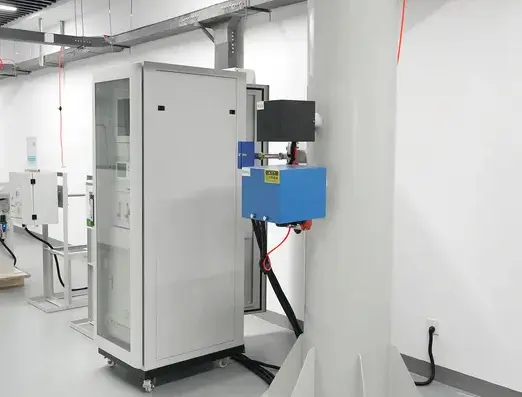
A complete continuous emission monitoring system is not a single instrument. It is an integrated assembly that typically includes:
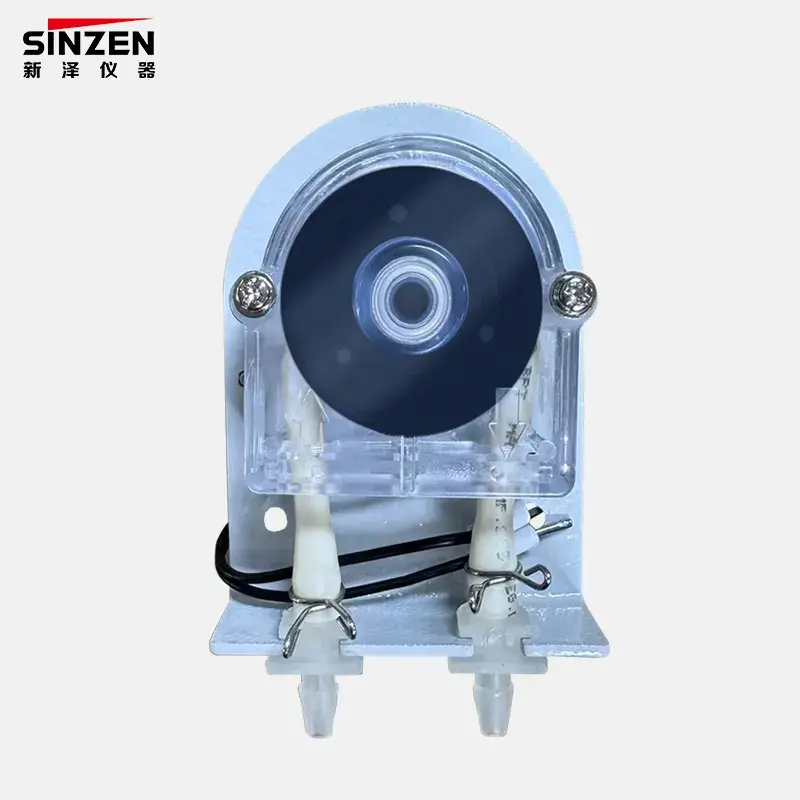
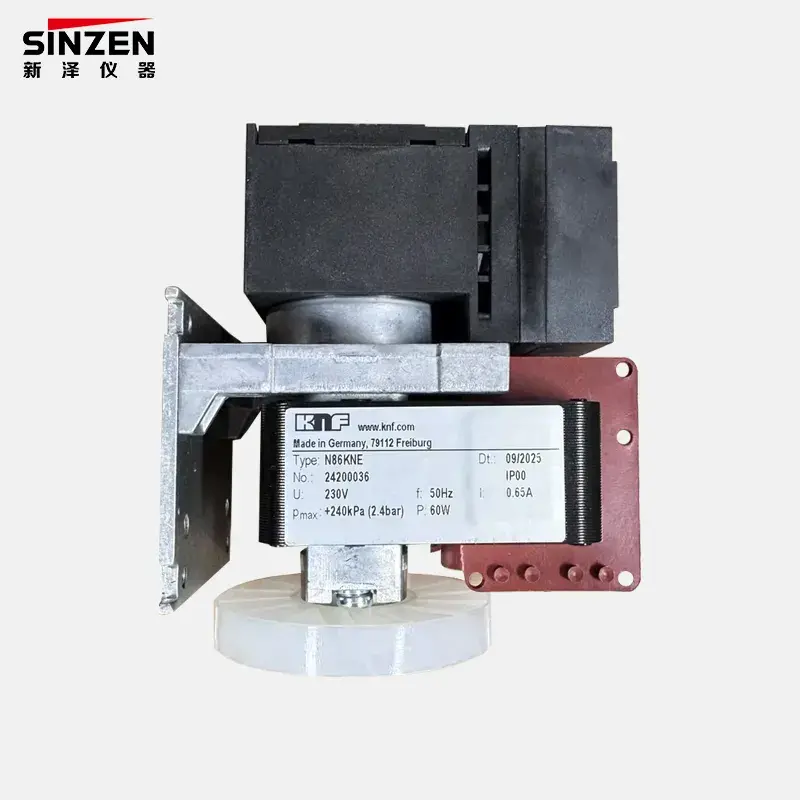
- sample extraction and conditioning components (probes, filters, coolers, pumps);
- gas analyzers for gaseous pollutants;
- particulate matter monitors where required;
- flow, temperature, pressure and moisture sensors;
- a data acquisition and handling system (DAHS) that validates data, calculates averages and generates regulatory reports.
The purpose of a CEMS is simple: to provide accurate, defensible, around-the-clock evidence of what a facility is emitting, so operators can stay within legal emission limits and optimize their processes at the same time.
Why Continuous Emission Monitoring Matters
Regulatory compliance. In most industrialized regions, large stationary sources are required by law to operate continuous emission monitoring equipment. In the United States, EPA regulations under 40 CFR Part 60 require CEMS at many affected stationary sources, while Part 75 sets out the monitoring, certification and reporting requirements for the SO₂, NOₓ, CO₂, O₂, opacity, flow and moisture data used in emissions trading programs. In the European Union, the Industrial Emissions Directive (2010/75/EU) requires operators of large combustion plants and other installations to monitor emissions, and EN 14181 provides the quality-assurance framework for CEMS — from instrument suitability (QAL1) and in-situ calibration against reference methods (QAL2) to routine drift control (QAL3) and the annual surveillance test (AST). In China, the national standards HJ 75-2017 and HJ 76-2017 define the technical requirements, installation, and test methods for flue gas CEMS measuring SO₂, NOₓ and particulate matter at stationary sources.
Transparent emissions reporting. Many jurisdictions publish monitored emission data or use it for permit compliance, emissions trading and carbon accounting. Data credibility depends entirely on the reliability of the monitoring system behind it.
Operational efficiency. A well-configured CEMS does more than satisfy regulators. Oxygen and carbon monoxide readings reveal combustion efficiency; abnormal trends can expose a failing burner, a leaking heat exchanger or an over-dosed reagent. Facilities that monitor continuously often find that better data means less wasted fuel and fewer process upsets.
Public accountability. Accurate, continuous data gives communities, auditors and customers confidence that a plant is meeting its environmental commitments.
How Does a Continuous Emission Monitoring System Work?
Although designs vary, most flue gas CEMS follow the same logic chain:
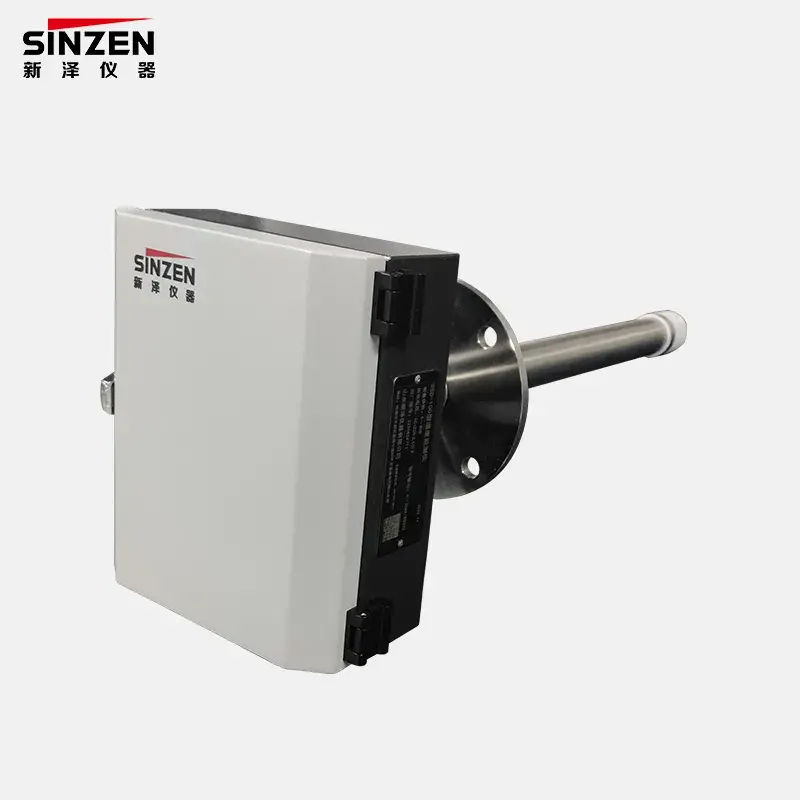
- Sample extraction. A heated probe extracts a representative gas sample from the stack. Extractive systems draw the sample out of the duct for analysis; in-situ analyzers measure directly across the stack.
- Sample conditioning. The hot, humid, dust-laden flue gas must be cleaned and dried before it reaches precision analyzers. In the widely used cold dry method, the sample is cooled so that moisture condenses out, protecting the analyzers and producing a dry-basis measurement that regulators commonly require.
- Analysis. Gas analyzers measure the concentration of each target component, while dedicated monitors measure particulate matter, flow velocity and other parameters.
- Data acquisition and handling. A DAHS collects the raw signals, validates them, applies calibrations, calculates averages and mass emission rates, and formats the data for submission to the regulator.
- Calibration and quality assurance. Systems are verified with zero and span gases on a routine basis, and periodically calibrated against independent reference methods according to the applicable standard (such as EN 14181 in Europe or the performance tests defined in Chinese HJ 76-2017).
What Pollutants Can a CEMS Measure?
A modern CEMS can monitor a wide range of flue gas parameters, including:
- Nitrogen oxides (NOₓ, i.e. NO and NO₂)
- Carbon monoxide (CO) and carbon dioxide (CO₂)
- Particulate matter / dust concentration
- Volatile organic compounds (VOCs)
- Ammonia slip (NH₃) from SCR/SNCR de-NOₓ systems
- Hydrogen chloride (HCl) and other acid gases
- Mercury and other trace metals in specific applications
- Flue gas flow, temperature, pressure and moisture — essential for converting concentrations into mass emission rates
Measurement Technologies Behind CEMS
The analyzer technologies used in continuous emissions monitoring equipment for flue gas vary by pollutant, concentration range and application:
- Non-dispersive infrared (NDIR) analyzers are workhorses for CO, CO₂, SO₂ and NO in combustion flue gas.
- Chemiluminescence analyzers provide accurate low-level NOₓ measurement, commonly used at power plants and waste incinerators.
- Flame ionization detection (FID) measures total VOCs, including methane and non-methane hydrocarbons.
- Paramagnetic and zirconia sensors measure oxygen with excellent stability.
- Tunable diode laser absorption spectroscopy (TDLAS) offers in-situ, fast-response measurement with low drift for gases such as NH₃, HCl and O₂.
- UV / DOAS and FTIR techniques can measure multiple gas components simultaneously.
- Beta-ray attenuation and light-scattering monitors are widely used for particulate matter.
The right choice depends on the flue gas matrix — temperature, moisture, dust loading and corrosiveness — as well as the regulatory measurement basis (wet or dry) and the concentration range of interest. This is why professional application engineering matters as much as the instruments themselves.
How to Choose Continuous Emissions Monitoring Equipment for Flue Gas
Selecting the right continuous emissions monitoring equipment for flue gas is a project-critical decision. A system that fails certification, drifts out of specification, or goes down when the regulator asks for data can be far more expensive than the equipment itself. Buyers should evaluate at least the following:
- Measured parameters and applicable standards. Start from the local emission limits and the monitoring standard your facility must meet — the parameters, measurement basis and performance requirements come first, not the equipment catalog.
- Measurement principle fit. High dust, high moisture, corrosive or high-temperature flue gas demands a system (including sample conditioning) engineered for that environment. Cold dry method extractive systems, for example, are a proven choice for SO₂/NOₓ monitoring on coal-fired and industrial boilers.
- Accuracy, repeatability and detection limits. Verify that the analyzers can measure your expected concentration ranges with sufficient accuracy and stability.
- Certifications and compliance evidence. Look for manufacturer certifications such as ISO 9001 quality management, ISO 14001 environmental management, and product certifications such as CCEP (China Environmental Protection Product Certification) where applicable, and ask for documented compliance evidence for the target market.
- Reliability and maintainability. Consider mean time between failures, availability of spare parts, and how easy the system is to maintain in the field.
- Data handling and reporting. The DAHS must handle data validation, averages, emission-rate calculations and the report formats your regulator expects.
- Manufacturer support. Commissioning, training, operation and maintenance services, and responsive after-sales support determine real-world uptime. A manufacturer with an engineering team and a service hotline is worth more than a marginally cheaper box.
- Total cost of ownership. Compare the full lifecycle cost — not just the purchase price — including consumables, maintenance, certification testing and potential downtime.
Why Partner with an Experienced CEMS Manufacturer
Continuous emission monitoring is a long-term commitment, not a one-time purchase. The equipment will run for years in a harsh environment, and its data will be scrutinized by regulators. This is why many plant owners prefer to work directly with a manufacturer that has its own research, development and production capabilities.
Shandong SINZEN Instrument Co., Ltd., based in Jinan, Shandong Province, is a high-tech enterprise specializing in the research, development, production, sales and after-sales service of environmental online monitoring systems, gas analyzers and process analysis systems. SINZEN’s product range includes CEMS based on the cold dry method, greenhouse gas (CO₂) online continuous monitoring systems, ammonia slip monitoring equipment, integrated extractive particulate matter monitors, VOCs continuous monitoring systems, and industrial gas analysis systems for the iron and steel metallurgical industry. The company holds ISO 9001, ISO 14001 and ISO 45001 management-system certifications, as well as CCEP China Environmental Protection Product Certification and CES China Environmental Service Certification, and is a member of the China Environmental Protection Industry Association. Its solutions serve environmental monitoring, new energy and air separation, process and safety control, and greenhouse gas emission monitoring applications.
Conclusion
Continuous emission monitoring turns a regulatory obligation into a management advantage: accurate, around-the-clock data keeps a plant compliant, efficient and credible. The key to success is choosing continuous emissions monitoring equipment for flue gas that matches the application, meets the applicable standards, and is backed by a manufacturer that will stand behind it for the life of the system.
If you are planning a new monitoring project or upgrading an existing system, our engineers can help you define the parameters, select the right equipment, and prepare for compliance. Contact SINZEN to discuss your requirements —
contact us for equipment selection and technical consultation.
Frequently Asked Questions
What does CEMS stand for?
CEMS stands for continuous emission monitoring system — an integrated system that automatically measures and records pollutant emissions from an industrial stack or flue.
Is a CEMS mandatory?
In most jurisdictions, major stationary sources such as power plants, large boilers, cement kilns, waste incinerators and large industrial furnaces are required to operate a CEMS when emission limits apply. The specific requirement depends on local legislation and the facility type.
What gases does a CEMS typically measure?
The most common parameters are SO₂, NOₓ, CO, CO₂, O₂ and particulate matter, with VOCs, NH₃, HCl, mercury and flow measurements added according to the process and regulatory requirements.
How often does a CEMS need to be calibrated?
Routine zero and span checks are typically performed regularly (for example, daily to weekly depending on the standard), while full in-situ calibration against reference methods follows the schedule defined by the applicable quality-assurance standard.