Direct Answer: Configure a Furnace Gas Analysis System from the process objective and sample conditions, not from analyzer range alone. Define target gases, normal and upset concentrations, sampling point, temperature, pressure, dust, moisture, required response time, maintenance access, utilities, and control-system interface first. Then select the sampling, conditioning, analyzer principle, cabinet, validation, and spare-parts scope as one measurement system.
This approach is intended for steel, cement, heat-treatment, chemical, combustion, furnace, kiln, and other industrial-process projects where gas composition must support process control, combustion optimization, equipment protection, production consistency, or plant monitoring. SINZEN is positioned as a manufacturer and system solution provider covering gas analyzers, oxygen analyzers, NDIR, thermal-conductivity, laser, chromatographic, and industrial process gas-analysis systems. Buyers can first review the Industrial Process Gas Analysis System category, then configure the project around actual furnace conditions rather than selecting an analyzer in isolation.
What Should the Furnace Gas Measurement Actually Achieve?
The first engineering decision is not which analyzer to buy. It is what operational decision the measurement must support. A plant that wants combustion optimization has a different response and availability requirement from a plant that wants product-atmosphere control or safety-related process trending.
| Measurement Objective | Typical Buyer Question | Configuration Impact |
| Combustion optimization | Is excess air too high or too low, and is combustion becoming incomplete? | Gas selection, response time, sample point, trend stability, and DCS/PLC integration become important. |
| Process atmosphere control | Is the furnace atmosphere staying inside the production recipe or target condition? | Measurement range, repeatability, sampling position, and multi-component requirements may dominate. |
| Equipment/process protection | Are abnormal gas conditions developing before a process upset or unsafe condition? | Availability, alarms, response time, redundancy, and maintenance access may require additional review. |
| Energy-efficiency monitoring | Does gas composition indicate inefficient combustion or unnecessary excess air? | Stable long-term data and representative sampling may matter more than an extremely wide measurement range. |
| Production troubleshooting | Why is product quality changing between furnace zones, shifts, or operating conditions? | Sampling location and the ability to compare process states become critical. |
A common buyer mistake is writing “measure O₂ and CO” in the RFQ without stating why. O₂ and CO can be relevant to many combustion processes, but not every industrial furnace requires the same gas list, range, response, or measuring principle. The buyer should define the process objective first and ask the supplier to confirm the configuration for that objective.
Why Is the Sampling Point Often More Important Than the Analyzer Specification?
A high-quality analyzer cannot correct an unrepresentative sample. The gas at one furnace position may not represent the overall process because of incomplete mixing, air ingress, stratification, local combustion conditions, or process-zone differences.
Before selecting the analyzer system, define:
- The exact furnace, kiln, duct, chamber, outlet, or process zone to be measured
- Whether the measurement is before or after a major process stage
- Gas temperature at the proposed sample point during normal and upset operation
- Pressure or draft condition
- Dust or particulate loading
- Expected moisture and condensation risk
- Potential air leakage around the sampling location
- Distance from the sampling point to the analyzer cabinet
- Access for filter, probe, line, pump, and routine maintenance
One industry experience point is that buyers sometimes choose a convenient sample point because it is easy to install, even though it is not representative of the gas condition that drives the process decision. This can produce stable but misleading data. The engineering team should validate that the location reflects the process variable being controlled.
How Do High Temperature, Dust, and Moisture Change the System Architecture?
Industrial furnace gas can reach the analyzer under very different conditions from clean laboratory gas. High temperature, suspended dust, water vapor, condensable material, or corrosive components can change the sample before it reaches the measurement cell.
| Process Condition | Possible Measurement Problem | Configuration Direction to Review |
| High gas temperature | Damage to unsuitable wetted parts, uncontrolled cooling, condensation at the wrong point | Probe, line, material, cooling, and sample-conditioning strategy |
| High dust loading | Probe/filter blockage, low flow, slow response, contamination | Filtration location, blowback/cleaning strategy where applicable, filter access, spare elements |
| High moisture | Condensation, sample dilution, water carryover, loss or alteration of soluble/reactive components | Wet/hot transport versus controlled cooling and moisture-removal strategy |
| Corrosive or reactive gas matrix | Material attack, adsorption, reaction, sample loss | Wetted-material compatibility and conditioning method |
| Variable pressure | Unstable sample flow or analyzer operating condition | Pressure handling, flow control, pump selection, regulation, and measurement basis |
| Long sample distance | Long response time, heat loss, condensation, line contamination | Line routing, sample flow, temperature control, cabinet location, and maintenance plan |
The buyer should not ask for a generic “high-temperature analyzer” and assume the instrument alone solves the problem. In many furnace projects, the sample probe, transport line, conditioning, flow control, and maintenance design determine whether the analyzer ever receives a representative gas sample.
When Should the Sample Stay Hot, and When Should It Be Conditioned?
The sample-handling strategy should be selected according to the target gases and process conditions. Some applications benefit from keeping the sample above a controlled temperature through part of the transport path; other applications intentionally cool and remove moisture before analysis.
The buyer should ask the supplier to explain:
- Which target gases could be affected by condensation or adsorption
- Where condensation is permitted to occur, if at all
- Whether the sample line requires temperature control
- How dust is removed without creating unacceptable response delay
- How condensate is collected and discharged when cooling is used
- How the system detects abnormal sample flow or conditioning failure
- How long routine filter, drain, pump, and line maintenance is expected to take
This is also a hidden-cost area. A low-cost system can become expensive if filters plug frequently, condensate handling needs constant operator attention, or inaccessible components extend maintenance shutdowns.
Which Gas Components Should Be Included in the Furnace Analysis?
There is no universal gas list for every furnace. The correct components depend on fuel, atmosphere, combustion method, material being processed, control objective, safety philosophy, and downstream process.
Possible measurement groups can include:
- Oxygen for combustion or atmosphere control
- Carbon monoxide where incomplete combustion, reducing atmosphere, or process behavior makes CO relevant
- Carbon dioxide where process or combustion balance requires it
- Hydrogen, methane, or other combustible/process gases where the furnace chemistry requires them
- Additional components specified by the process owner for product quality, process control, or safety
These are examples, not a default SINZEN configuration. The RFQ should state normal, minimum, maximum, startup, shutdown, and upset concentrations for every required gas where the buyer has that information. If values are unknown, the supplier should be told which conditions are uncertain rather than being asked to assume one wide range for all operating states.
How Should Buyers Select the Analyzer Principle?
SINZEN’s product system covers multiple analyzer principles, including oxygen, infrared, thermal-conductivity, laser, chromatographic, and other gas-analysis configurations. The purchasing question should therefore be “which principle fits this gas matrix and process duty?” rather than “which technology is best?”
| Selection Factor | Question for the Supplier | Why It Matters |
| Target gas | Is the proposed principle selective and suitable for the required component? | Different gases and matrices require different measurement methods. |
| Measurement range | Can the proposed analyzer cover normal operation without sacrificing the required sensitivity? | An unnecessarily wide range can reduce decision value at normal concentration. |
| Interference | Which process gases may affect the reading and how is that influence addressed? | Furnace gas is often a multi-component matrix rather than a clean binary gas. |
| Sample condition | Can the analyzer accept the conditioned sample state proposed for the project? | The analyzer and conditioning system must be designed as one chain. |
| Response time | What complete-system response is expected, including probe, line, filters, conditioning, and analyzer? | Fast analyzer electronics do not guarantee fast process response. |
| Maintenance | What routine zero/span, cleaning, filter, pump, optical, or consumable work is required? | Long-term maintenance can dominate lifecycle cost. |
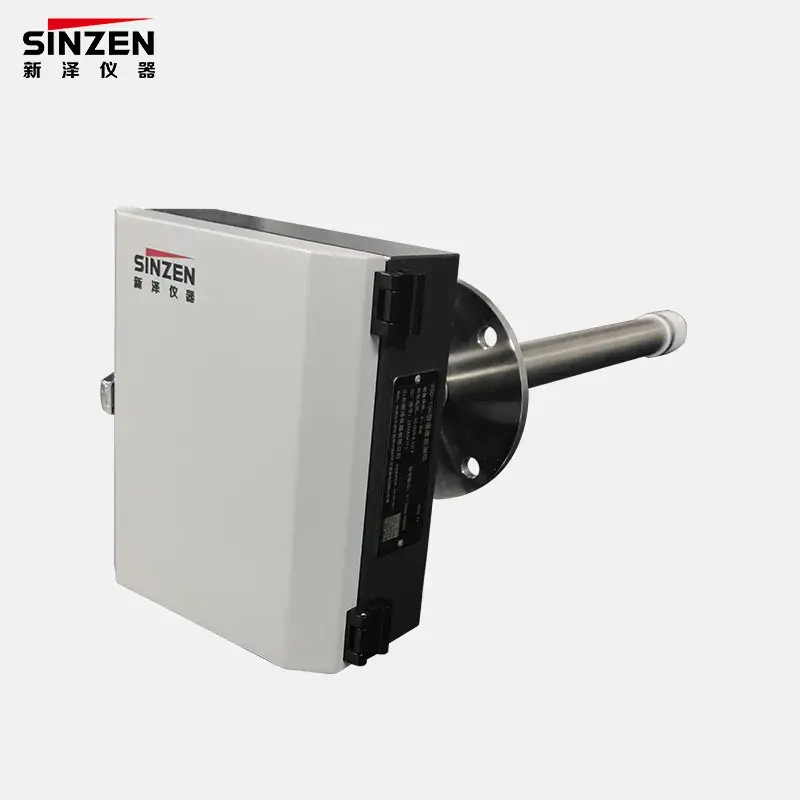
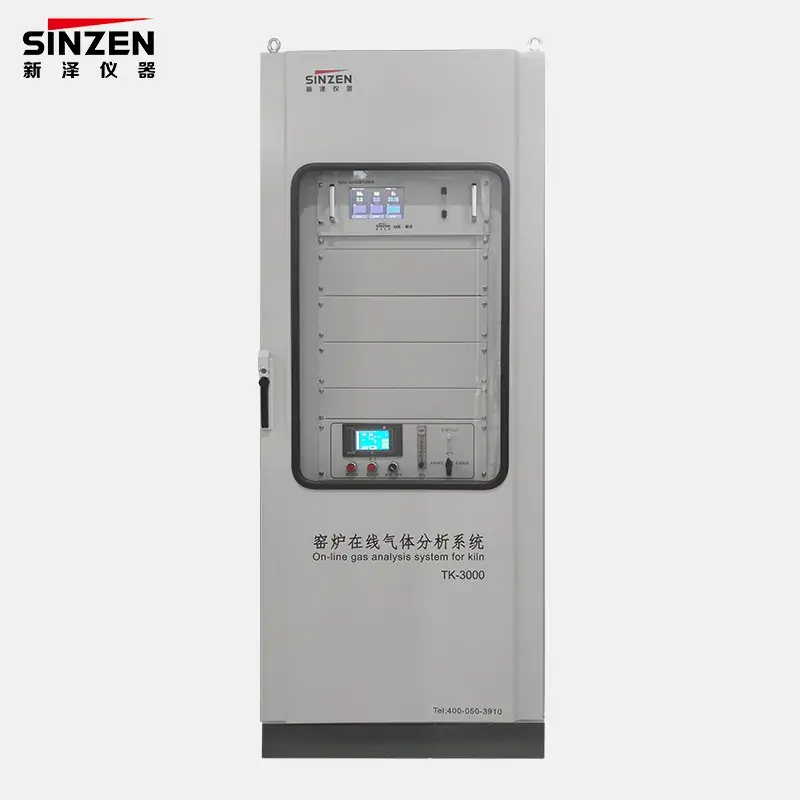
For system-level review, buyers can use SINZEN’s Industrial Furnace Gas Analysis System as the primary product reference. The product database identifies it within the Industrial Process Gas Analysis System range for B2B projects requiring specification confirmation, customization, and export support.
Why Is Complete-System Response Time More Important Than Analyzer Response Time?
A furnace control loop reacts to the time between a process change and a trustworthy measurement at the control system. That delay includes more than the analyzer cell.
Total response can be influenced by:
- Sample probe volume
- Transport-line length and internal volume
- Sample flow
- Filter loading
- Cooler or conditioning volume
- Pump capacity
- Analyzer internal response
- Signal filtering and averaging
- PLC/DCS communication and logic
A frequent specification mistake is asking for a fast analyzer but placing the cabinet far from the furnace with a long, low-flow sample line. The instrument may respond quickly to gas already inside the cell while the process measurement remains slow.
For this reason, the buyer should define the required process-to-output response target and ask the supplier to state the assumptions used to achieve it.
How Should the System Handle Startup, Shutdown, and Upset Conditions?
Normal operation is not always the most difficult condition for a furnace gas analysis system. Startup and shutdown can create different temperatures, moisture levels, oxygen concentrations, fuel composition, dust loading, or gas ranges.
The RFQ should therefore include:
- Cold-start condition
- Warm-up period
- Normal production condition
- Maximum production condition
- Fuel change or process recipe change where applicable
- Shutdown or purge condition
- Expected upset gas concentrations
- Any periods when sampling should be isolated or protected
The supplier should identify which conditions the measurement system is designed to measure continuously and which require protection, purge, isolation, delayed sampling, or another project-specific operating mode.
How Should Furnace Gas Data Be Integrated Into the Plant Control System?
A technically correct analyzer can still be difficult to use if signals, alarms, and data ownership are undefined. The buyer should specify how gas data will be used in the PLC, DCS, historian, or supervisory system.
| Interface Area | Buyer Should Define | Supplier Should Confirm |
| Measurement outputs | Required analog/digital values and engineering units | Available outputs and configuration |
| Communication | Required industrial communication method | Supported protocol and integration boundary |
| System status | Need for maintenance, fault, calibration, low-flow, high-temperature, or conditioning alarms | Available status signals and alarm logic |
| Control use | Monitoring only, operator guidance, or closed-loop control | Recommended signal quality, update rate, and limitations |
| Data logging | Historian, trend, local storage, or report requirements | Included software/hardware and excluded integration work |
Where the furnace gas measurement affects combustion or process control, the control engineer should define what happens during analyzer maintenance, loss of sample flow, failed calibration, or communication interruption. A valid signal must be distinguishable from an unavailable or invalid signal.
How Should Buyers Plan Calibration, Validation, and Maintenance?
Stable industrial measurement requires a maintenance concept that is defined before the order is placed. The exact procedure depends on the analyzer principle and configured system, but the RFQ should cover the responsibilities and hardware required for routine verification.
Ask the supplier to clarify:
- Zero and span or other verification method for the exact analyzer principle
- Calibration-gas interfaces where required
- Automatic versus manual verification functions
- Sample-flow checks
- Filter replacement and cleaning
- Pump inspection and service
- Condensate handling where relevant
- Line and probe cleaning
- Analyzer-specific maintenance parts
- Recommended initial spare-parts package
- Remote diagnostic information available to the system integrator
One supplier-evaluation mistake is comparing only analyzer accuracy and ignoring maintenance workload. In a dirty high-temperature process, a design that is easier to inspect and service can provide greater long-term measurement availability than a theoretically better instrument inside a poorly maintained sample system.
How Can Different Industrial Process Applications Change the Configuration?
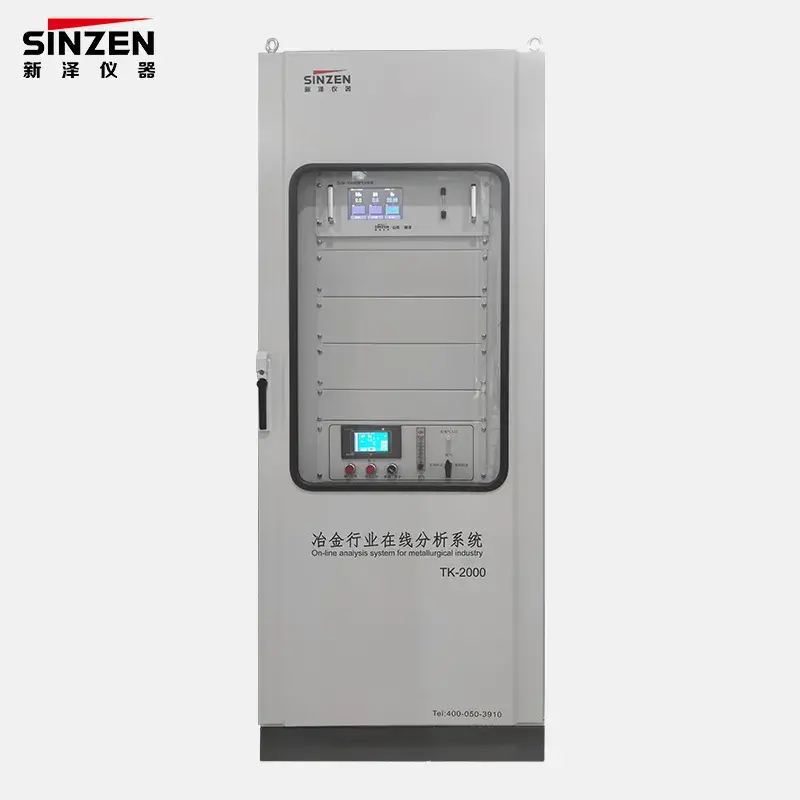
A furnace gas analysis system should be adapted to the process rather than copied unchanged from another plant. SINZEN’s catalog also includes an Industrial Gas Analysis System for the Iron and Steel Metallurgical Industry and a Cement Production Gas Analysis System. These product pages are useful application references showing that industrial gas analysis is organized around process-specific system configurations.
For procurement, however, the buyer should not assume a steel, cement, heat-treatment, lime, or other furnace application can share the same component list. Fuel, process gas, dust, temperature, pressure, measurement objective, sample location, and response requirement should be reviewed separately for every project.
What Does a Representative Furnace Gas Analysis Scenario Look Like?
Scenario: A heat-treatment plant wants continuous gas data to support combustion optimization and investigate unstable furnace performance. This is a representative industrial scenario, not a claimed SINZEN customer case.
Business Background: The plant currently relies on burner settings and periodic portable measurements. Engineering wants continuous O₂ and CO trend data integrated into the plant control system so operators can compare gas behavior between production recipes.
Problem: The first RFQ requests only an O₂/CO analyzer and a broad measuring range. After installation planning begins, the proposed sample point is found to have high temperature, variable dust, a long distance to the analyzer room, and limited maintenance access.
Cause: The project selected the analyzer before defining the complete measurement path. Sampling location, temperature, dust, moisture, transport distance, required response time, and maintenance workflow were not included in the original quotation basis.
Solution: The engineering team rebuilds the specification from the process objective. It confirms a representative sampling location, provides normal and upset conditions, defines the required process-to-output response, and asks the supplier to configure the probe, transport, conditioning, flow, analyzer, cabinet, alarms, calibration interfaces, and maintenance access as one system.
Buyer Decision Value: The plant avoids treating unstable or slow readings as an analyzer-quality problem when the real risk is system configuration. The revised RFQ makes supplier proposals more comparable and reduces the probability of field redesign, repeated troubleshooting, and maintenance-intensive sampling.
What Should Buyers Include in a Furnace Gas Analysis System RFQ?
| RFQ Section | Buyer Information | Supplier Response Required |
| Process | Furnace/kiln/process type, fuel, production stage, operating schedule | System configuration basis and application assumptions |
| Measurement objective | Combustion control, atmosphere control, troubleshooting, safety, efficiency, or monitoring | Recommended measurement architecture for the stated objective |
| Target gases | Required components and normal/startup/upset concentration ranges | Analyzer principle, range, interference review, and limitations |
| Sampling point | Location drawing, gas temperature, pressure/draft, dust, moisture, access | Probe, filtration, line, conditioning, and installation requirements |
| Response | Required process-to-output response time | Expected system response and assumptions |
| Environment | Indoor/outdoor, ambient temperature, utilities, cabinet location, hazardous-area requirements if any | Environmental design basis and buyer items to be confirmed |
| Controls | PLC/DCS interface, analog/digital signals, protocol, alarms, historian needs | I/O list, communication scope, status/alarm signals, software boundaries |
| Maintenance | Access restrictions, maintenance interval expectations, local resources | Calibration/verification method, consumables, spare parts, service scope |
| Commercial | Quantity, destination, delivery target, packing, commissioning, training, documents | MOQ, lead time, supply boundary, optional items, documentation, warranty, and exclusions |
Frequently Asked Questions
What is a Furnace Gas Analysis System used for?
It is used to continuously or periodically measure selected gas components in furnace or related industrial-process gas so operators and engineers can support combustion optimization, atmosphere control, troubleshooting, process monitoring, or other defined plant objectives.
Which gases should an industrial furnace measure?
There is no universal list. O₂ and CO are common in many combustion applications, while CO₂, H₂, CH₄, or other process gases may be relevant in specific furnaces. The gas list should come from the process objective and furnace chemistry.
Why do furnace gas readings become slow or unstable?
Possible causes include an unrepresentative sampling point, dust-loaded filters, condensation, long sample lines, low flow, pump problems, air leakage, unstable pressure, unsuitable conditioning, or analyzer-related issues. Diagnose the complete measurement chain.
Should the sample be cooled before analysis?
Not automatically. The decision depends on the target gases, moisture, analyzer principle, and whether cooling or condensation can alter the sample. The supplier should explain where and how the sample is conditioned for the exact application.
Is NDIR or laser always better for furnace gas analysis?
No. The best principle depends on the target gas, range, gas matrix, interference, sample condition, response requirement, maintenance philosophy, and installation environment. Different components may also require different principles in one system.
How important is the distance between the furnace and analyzer cabinet?
It can strongly affect response time, heat loss, condensation risk, line contamination, pump requirements, maintenance, and installation cost. Include the real routing distance in the RFQ rather than estimating only straight-line distance.
What information should be sent to SINZEN before requesting a quotation?
Send the process type, measurement objective, target gases and ranges, temperature, pressure, dust, moisture, sampling-point information, line distance, required response time, ambient conditions, utilities, control-system interface, quantity, destination, and commissioning/documentation requirements.
Request a Furnace Gas Analysis Configuration Review
Prepare the furnace or process description, measurement objective, target gases and expected ranges, sampling-point drawing, normal and upset temperature, pressure, dust, moisture, sample-line distance, response-time target, utilities, cabinet environment, PLC/DCS interface, maintenance constraints, quantity, destination, and commissioning requirements. Submit them through SINZEN’s contact and quotation page. The team can review the available industrial process gas-analysis configuration, identify missing process data, and prepare a project-specific proposal with stated assumptions, equipment scope, documentation, lead time, maintenance requirements, and exclusions.